I wish you all the happiest and healthiest of New Years. May you each enjoy 2008 in all ways possible. Carpe Diem!
This month's issue is a long one as I try to move on through Ireland and Scotland. It was such a great trip that even with all I'm writing, I'm touching only the highlights. So please take your time and come back often. By clicking on the photos, you can enlarge them.
Thank you also for using TATravel Agency. One of the benefits of this search engine is that you can design your own flights rather than take the "packages" offered by other search engines. It gives you the opportunity to travel when you want to travel, and anything that makes us able to do it OUR way makes the trip more pleasureable.
Sunday, December 30, 2007

IRELAND--DAY 9
travel "travel+blogs" senior "senior+travel" "third+age" "third+age+travel" Ireland "Northern+Ireland" "the+troubles" Londonderry "third+age+traveler" photos "travel+photos"  Today our local guide for a second tour of London/Derry and its environs added another level to the story of the Troubles. Our coach drives us out into the countryside, to places just becoming “suburban” because it used to be too dangerous to venture into these “training areas.” This is a day devoted to history.
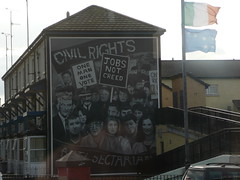
Carolyn is Catholic, and she tells us “the troubles” were originally a civil rights issue—exactly as Ronan had said in London/Derry. No voting rights for people who owned no property. Hence, poor Catholics and Protestants took to the streets emulating Martin Luther King’s methods of non-violent protest. Some trouble makers at the back of the march started a riot, and things quickly spiraled out of control. The government blamed the Catholics, and the press ate it up! Remember McLuhan’s “the medium is the massage.”
Carolyn grew up in a five bedroom house in the bogside—Catholic side—living with five other families, each family having one bedroom and all families sharing bathroom and kitchen facilities.
Carolyn’s grandfather’s boss, however, was a Protestant who owned several houses (and had several votes). He offered one house to Carolyn’s grandfather. Carolyn’s father took the mortgage, and for two years the family lived happily—until the Troubles began in 1969. The violence became so “normal” that as teenagers, she and her girlfriends went to whatever civil riots were going on in order to meet boys. Most people did not like the extremist groups on either side, but young men flexing their muscles flocked to join—another way of perpetuating the ongoing violence.
Most people, she explained, were simply looking for their Civil Rights—one man, one vote.
Today Carolyn’s teenage sons are offered a better life, and that is all they ever asked for. She pointed out the recently removed border guards (some as recently as July) and the calmness—though tentative—that is almost palpable.
We drove up to areas in the countryside just being developed for housing. It was too dangerous to build there only a short time ago as the countryside was training grounds for the different groups. But we did visit Grianan Ailligh, a large stone walled fort with a commanding view of Loughs Foyle and Swilly. It was the royal citadel of the O’Neills from the 5th to 12th centuries. The fort was probably built around the time of Christ, and there is an ancient burial ground that dates back to 3000 BC. Do I have to say this was impressive????!!
The peace is so fragile. Both Carolyn and Ronan voiced concern about Halloween, and the weekend before we arrived there was a raucous demonstration in Guildhall that ended with about $2000 worth of media equipment damage. The video ended up on YouTube, and the mayor made a statement about how they were sending out the wrong message to the world and to would-be tourists, a big source of revenue for this struggling country that would love to catch the tail of the Celtic Tiger.
This was a very touching day. I thought back to yesterday and two events in a pub. 1. I took a photo of Aggie and Owen at the bar. The young Irishman they were talking to was decidedly annoyed. In Northern Ireland, you don’t just take pictures. There’s that nagging feeling that your identity will be turned over to authorities. 2. I met an elderly gentleman in the pub and Rob got to talking to him. When we left, Rob shook his hand and said how nice it was to meet him. He said we all want the same things in life—to live it a little better. And then Rob agreed, squeezed his hand, and the man started to cry.
 travel
 Today our local guide for a second tour of London/Derry and its environs added another level to the story of the Troubles. Our coach drives us out into the countryside, to places just becoming “suburban” because it used to be too dangerous to venture into these “training areas.” This is a day devoted to history.
Carolyn is Catholic, and she tells us “the troubles” were originally a civil rights issue—exactly as Ronan had said in London/Derry. No voting rights for people who owned no property. Hence, poor Catholics and Protestants took to the streets emulating Martin Luther King’s methods of non-violent protest. Some trouble makers at the back of the march started a riot, and things quickly spiraled out of control. The government blamed the Catholics, and the press ate it up! Remember McLuhan’s “the medium is the massage.”
Carolyn grew up in a five bedroom house in the bogside—Catholic side—living with five other families, each family having one bedroom and all families sharing bathroom and kitchen facilities.
Carolyn’s grandfather’s boss, however, was a Protestant who owned several houses (and had several votes). He offered one house to Carolyn’s grandfather. Carolyn’s father took the mortgage, and for two years the family lived happily—until the Troubles began in 1969. The violence became so “normal” that as teenagers,
 she and her girlfriends went to whatever civil riots were going on in order to meet boys. Most people did not like the extremist groups on either side, but young men flexing their muscles flocked to join—another way of perpetuating the ongoing violence.
Most people, she explained, were simply looking for their Civil Rights—one man, one vote.
Today Carolyn’s teenage sons are offered a better life, and that is all they ever asked for. She pointed out the recently removed border guards (some as recently as July) and the calmness—though tentative—that is almost palpable.
We drove up to
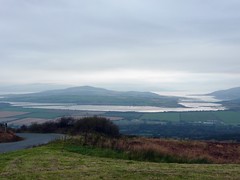 areas in the countryside just being developed for housing. It was too dangerous to build there only a short time ago as the countryside was training grounds for the different groups. But we did visit Grianan Ailligh, a large stone walled fort with a commanding view of Loughs Foyle and Swilly. It was the royal citadel of the O’Neills from the 5th to 12th centuries. The fort was probably built around the time of Christ, and there is an ancient burial ground that dates back to 3000 BC. Do I have to say this was impressive????!!
The peace is so fragile. Both Carolyn and Ronan voiced concern about Halloween, and the weekend before we arrived
 there was a raucous demonstration in Guildhall that ended with about $2000 worth of media equipment damage. The video ended up on YouTube, and the mayor made a statement about how they were sending out the wrong message to the world and to would-be tourists, a big source of revenue for this struggling country that would love to catch the tail of the Celtic Tiger.
This was a very touching day. I thought back to yesterday and two events in a pub. 1. I took a photo of Aggie and Owen at the bar. The young Irishman they were talking to was decidedly annoyed. In Northern Ireland, you don’t just take pictures. There’s that nagging feeling that your identity will be turned over to authorities. 2. I met an elderly gentleman in the pub and Rob got to talking to him. When we left, Rob shook his hand and said how nice it was to meet him. He said we all want the same things in life—to live it a little better. And then Rob agreed, squeezed his hand, and the man started to cry.
travel
DAY9--PART 2
travel "travel+blogs" senior "senior+travel" "third+age" "third+age+travel" Ireland "Northern+Ireland" "Giants+Causeway" "third+age+traveler" photos "travel+photos" Sometimes good ole Mother Nature really goes out of her way to WOW you, and that’s exactly what she does at Giant’s Causeway in Northern Ireland. Take your pick at the explanation of this unbelievable phenomenon.
(briefly) Once upon a time, a giant, Finn McCool, falls in love with a woman across the sea. He throws stones to create a causeway and goes to see her. Her husband, Benandonner, an even bigger giant, finds out. Finn, who is no dummy, scurries back across the causeway. His wife hides him in their baby giant’s cradle--cap, pacifier and all. Meanwhile, the irate husband follows Finn over the causeway and demands his whereabouts from Finn’s wife. But when he sees the cradle and the size of the baby within, he decides that Finn might be more than he wishes to tackle, and he makes a hasty exit. He wants to assure that Finn does not come after him (and his wife), so as he crosses, he destroys the causeway, and what we view today is all that is left.
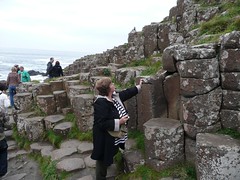
(also briefly) Geophysically, 60 million years ago as the continental plates moved apart, lava flowed into the cracks. As there was no volcanic activity for a long while, the lava cooled slowly. About 15.000 years ago after the ice age, the Causeway was exposed. As it continued to cool, the surface dried evenly in columns, like drying mud. There are approximately 40,000 columns, most five or six sided though some are four, seven or even eight sided.
Whichever version you choose, Giant’s causeway is a sight to behold. From the 1700s it was widely known as the eighth wonder of the world. Nature was surely working her marvels here in Northern Ireland.
travel
Nature really goes out of her way to WOW you, and that’s exactly what she does at Giant’s Causeway in Northern Ireland. Take your pick at the explanation of this unbelievable phenomenon.(briefly) Once upon a time, a giant, Finn McCool, falls in love with a woman across the sea. He throws stones to create a causeway and goes to see her.
 Her husband, Benandonner, an even bigger giant, finds out. Finn, who is no dummy, scurries back across the causeway. His wife hides him in their baby giant’s cradle--cap, pacifier and all. Meanwhile, the irate husband follows Finn over the causeway and demands his whereabouts from Finn’s wife. But when he sees the cradle and the size of the baby within, he decides that Finn might be more than he wishes to tackle, and he makes a hasty exit. He wants to assure that Finn does not come after him (and his wife), so as he crosses, he destroys the causeway, and what we view today is all that is left.
(also briefly) Geophysically, 60 million years ago as the continental plates moved apart, lava flowed into the cracks. As there was no volcanic activity for a long while, the lava cooled slowly. About 15.000 years ago after the ice age, the Causeway was exposed. As it continued to cool, the surface dried evenly in columns, like drying mud. There are approximately 40,000 columns, most five or six sided though some are four, seven or even eight sided.
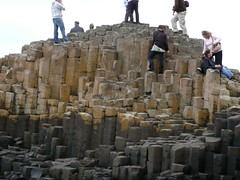
Whichever version you choose, Giant’s causeway is a sight to behold. From the 1700s it was widely known as the eighth wonder of the world. Nature was surely working her marvels here in Northern Ireland.
travel
IRELAND TO SCOTLAND--DAY 10
travel "travel+blogs" senior "senior+travel" "third+age" "third+age+travel" Ireland Scotland"travel+blogs" Belfast "Queens+University" "third+age+traveler" photos "travel+photos" Glasgow ferry "Irish+Sea"  We went to Belfast today. Here’s a city we’ve read about for many years. While Rob and I lived in Greenwood Lake, it was from Belfast that children—Catholic and Protestant—were brought over for a summer holiday. We learned how difficult it was for these poor, war-traumatized children to sleep. It was too quiet without the nightly fighting.
Belfast is still a segregated city, but it is making its own kind of progress. The barriers separating the Catholics and Protestants are, thankfully, gone. There are 24,000 students at the bustling University. Our local guide, born and living in Belfast her entire life, does not seem anxious to talk about the political situation as our London/Derry guides did. Rather, Hilda points out Belfast’s accomplishments and the new directions the city is taking. But, she adds, everything takes time. We’d like to take Ronan’s advice and re-visit in ten years. Hopefully improvement will continue and peace and cooler heads will prevail.
I t is time to leave Ireland for the next leg of our journey, Scotland. This is an exciting and anticipated transition. We take a ferry across the Irish Sea to Scotland. Randomly, several of our friends are frisked by customs officers—they stood in for the rest of us.
The coach boards the ship, we offload and make our way to the comfortable lounges to settle in for the two hour journey. I’d taken Dramamine because I was fearful that the Irish Sea would be rough, but the crossing is exceedingly smooth.
travel
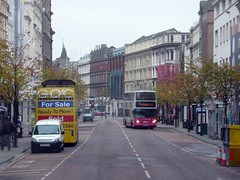 We went to Belfast today. Here’s a city we’ve read about for many years. While Rob and I lived in Greenwood Lake, it was from Belfast that children—Catholic and Protestant—were brought over for a summer holiday. We learned how difficult it was for these poor, war-traumatized children to sleep. It was too quiet without the nightly fighting.
Belfast is still a segregated city, but it is making its own kind of progress. The barriers separating the Catholics and Protestants are, thankfully, gone. There are 24,000 students at the bustling University.
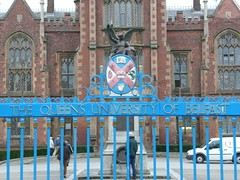 Our local guide, born and living in Belfast her entire life, does not seem anxious to talk about the political situation as our London/Derry guides did. Rather, Hilda points out Belfast’s accomplishments and the new directions the city is taking. But, she adds, everything takes time. We’d like to take Ronan’s advice and re-visit in ten years. Hopefully improvement will continue and peace and cooler heads will prevail.
I
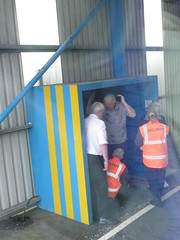 t is time to leave Ireland for the next leg of our journey, Scotland. This is an exciting and anticipated transition. We take a ferry across the Irish Sea to Scotland. Randomly, several of our friends are frisked by customs officers—they stood in for the rest of us.
The coach boards the ship, we offload and make our way to the comfortable lounges to settle in for the two hour journey. I’d taken Dramamine because I was fearful that the Irish Sea would be rough, but the crossing is exceedingly smooth.

Scotland from the get-go is different from Ireland. We drive through Ayreshire, stopping to see Alisa Craig and Robert Burns’ home.  Harry reads aloud to us: “My luv is like a red, red rose….” “Little Mousie” and bits of “Tam O’Shanter.” The mood on the coach shifts seamlessly as we enter a new country and culture. Then it is on to Glasgow.
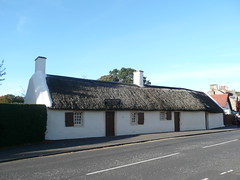 Harry reads aloud to us: “My luv is like a red, red rose….” “Little Mousie” and bits of “Tam O’Shanter.” The mood on the coach shifts seamlessly as we enter a new country and culture. Then it is on to Glasgow.travel
Saturday, December 29, 2007
SCOTLAND--DAY 11
travel "travel+blogs" senior "senior+travel" "third+age" "third+age+travel" Scotland"travel+blogs" "Robert+the+Bruce" "third+age+traveler" photos haggis bagpipes "Sword+Dance" Glasgow
travel
We spend two nights in Glasgow. This gives us time to tour and time to wander. One certainly complements the other.
Our tour includes a stop at St. Mungo’s Cathedral, an extraordinarily interesting place. It’s beautiful, St. Mungo is buried here, and it is the only remaining medieval cathedral on the Scottish mainland to survive the Reformation unscathed. Knox left quite a bit of damage in his wake. Once St. Mungo’s was a Catholic Cathedral, but now it is part of the High Kirk of Scotland. Its history is as fascinating as its Gothic architecture.
We also get a chance to visit the Burrell Collection, a marvelous museum left to the city by Sir William Burrell, made rich through ship building. Three thousand pieces of the eight thousand piece collection are displayed at any one time, and admission is free. Rob and I spend our time viewing the magnificent tapestry collection. Room after room of tapestry. Outstanding even if you’ve viewed the Met’s Unicorn Tapestries!
The highlight of the day, however, is our Robert Burns dinner.
 We drive out beyond Edinburgh and view a statue honoring one of Scotland’s greatest heroes, Robert the Bruce, King of the Scots, who fought to free Scotland from English rule. We are greeted by a kilt-clad Scottish piper who musically escorts us to the inn where we dine in true Scottish fashion. We are introduced, once and for all, to haggis, the favored dish of Robert Burns and all true Scotsmen. Burns wrote the famous poem “Ode to the Haggis,” and we are entertained with a rendition by our host before haggis is served to us
  with all the appropriate pomp and circumstance. Rob loves it, and finds a compatriot in our friend Aggie. I taste it. Actually not so bad. BTW, haggis in a variety of forms is served at breakfast and at other dinners we have. (Michael, remember Boy Scout Camp Ranachqua and the visiting Scottish Boy Scout Troop?)
Also this evening we are treated to Scottish piping—quite different from the Irish pipes—and to Scottish Dancing, including the famous Sword Dance which dates back to 1573.
It’s another delightful and entertaining day and evening, and we are j ust beginning to get a feeling for this country.
Our tour includes a stop at St. Mungo’s Cathedral, an

 extraordinarily interesting place. It’s beautiful, St. Mungo is buried here, and it is the only remaining medieval cathedral on the Scottish mainland to survive the Reformation unscathed. Knox left quite a bit of damage in his wake. Once St. Mungo’s was a Catholic Cathedral, but now it is part of the High Kirk of Scotland. Its history is as fascinating as its Gothic architecture.
We also get a chance to visit the Burrell Collection, a marvelous museum left to the city by Sir William Burrell, made rich through ship building. Three thousand pieces of the eight thousand piece collection are displayed at any one time, and admission is free. Rob and I spend our time viewing the magnificent tapestry collection. Room after room of tapestry. Outstanding even if you’ve viewed the Met’s Unicorn Tapestries!
The highlight of the day, however, is
 our Robert Burns dinner.
 We drive out beyond Edinburgh and view a statue honoring one of Scotland’s greatest heroes, Robert the Bruce, King of the Scots, who fought to free Scotland from English rule. We are greeted by a kilt-clad Scottish piper who musically escorts us to the inn where we dine in true Scottish fashion. We are introduced, once and for all, to haggis, the favored dish of Robert Burns and all true Scotsmen. Burns wrote the famous poem “Ode to the Haggis,” and we are entertained with a rendition by our host before haggis is served to us
  with all the appropriate pomp and circumstance. Rob loves it, and finds a compatriot in our friend Aggie. I taste it. Actually not so bad. BTW, haggis in a variety of forms is served at breakfast and at other dinners we have. (Michael, remember Boy Scout Camp Ranachqua and the visiting Scottish Boy Scout Troop?)
Also this evening we are treated to Scottish piping—quite different from the Irish pipes—and to Scottish Dancing, including the famous Sword Dance which dates back to 1573.
It’s another delightful and entertaining day and evening, and we are j
 ust beginning to get a feeling for this country. travel
Subscribe to:
Posts (Atom)