 |
| This simple statement says so much. In so many of the cities we visit, bicycles are a popular mode of transportation. This bike is in Victoria, British Columbia where bikes and bike racks abound. Come visit New York City, and you will see the transformation has occurred there too. |
Friday, June 13, 2014
FRIDAY'S FOTO

Monday, June 02, 2014
SMALL TOWN AMERICA ON MEMORIAL DAY 2014
 |
| Warwick High School student play Taps at the conclusion of the Memorial Day ceremony in the Warwick Cemetery |
I enjoy looking at the buildings, shops, and people of my town.
Never is that warm community feeling more obvious than on
Memorial Day. The parade through town warms the heart. The sidewalks are lined deep with residents of every age enthusiastically
waving American flags as the veterans go past. Some watchers call out “Thank you.” Some veterans respond by smiling or saluting.
They are the stars of this parade.
 |
| Families gather early to get the best seats |
 |
| The young people place flags wherever they can |
We’ve been in Warwick
for more than thirty years. I remember
when all the veterans walked the parade.
Lately many of the elderly ones are driven in cars or on wagons pulled
by trucks or tractors. Most recently
their numbers have sadly dwindled as those from World War II and Korea leave us. It’s disconcerting to see how few were there
this year.


Boy Scouts and Girl Scouts march in the parade with homemade
banners.


 |
| A marcher in training |

What we learn is that those who served our country in the military are more likely than not to come home and serve our community. A great number of our volunteer firemen march together as former members of the military.
 |
| Numerous veterans volunteer for our Fire Department. I'm sure you'll find the same exists on the Volunteer Ambulance Corps. |
Always in our parade are members of the Stewart
family—generations of men who have gone off in service to our country.
 |
| Members of the Stewart family usually serve as honor guard and lead the parade |
As the parade ends, we gather in the Warwick
Cemetery
 |
| This Boy Scout reads The Gettysburg Address |
 |
| This Girl Scout tells us the story of "Taps" |
There was a new American Legion Chaplain too as the prior one
passed away some weeks ago. His wife,
part of the Ladies’ Auxiliary, was there, however. This is what they did together, and she will
carry on alone. When the Commander of
the American Legion spoke, he reminded us that fast approaching is the 70th
anniversary of D-Day on June 4th.
There were people at the ceremony who participated in that moment in
history.
This is a town where the American Legion and the Veterans of
Foreign Wars play important roles. For
the last few years they’ve enlisted the aid of Boy Scouts who help place an
American flag on the grave of every veteran in the Warwick
Cemetery
 |
| This is the Memorial. The wreaths were placed by the different Veteran organizations and the Women's Auxiliary. I wonder what is going through these young boys' heads. |
When the names of the fallen are read aloud—including our
recent losses in Iraq
and Afghanistan —one
also hears the old familiar names of families who have farmed this area for
generations.
Enjoy the photos. I
believe with all my heart that the men and women we honor on Memorial Day
fought to keep this vision of America
alive and intact.
Friday, May 16, 2014
FRIDAY'S FOTO
 |
| We visited Drumcliff Cemetery in County Sligo, Ireland and paid homage to William Butler Yeats who is buried there. But it was this tombstone and its sentiment that moved me. Its sentiment is at once poignant and hopeful. |
Saturday, May 10, 2014
MORE TO NEVADA THAN LAS VEGAS; GO TO THE HOOVER DAM
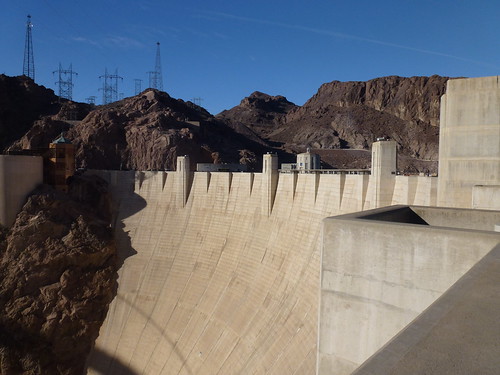 |
| The Hoover Dam straddles the Nevada-Arizona border |
Times and Las Vegas have certainly changed, but we
haven’t. While we are still not gamblers,
we’ve succumbed to Las Vegas ’ fascinating
allure. But I digress.
This post is really about Las Vegas
as a gateway to the fascinating Hoover Dam, a place that has been on our hit
list but which we somehow never managed to visit—until this trip.
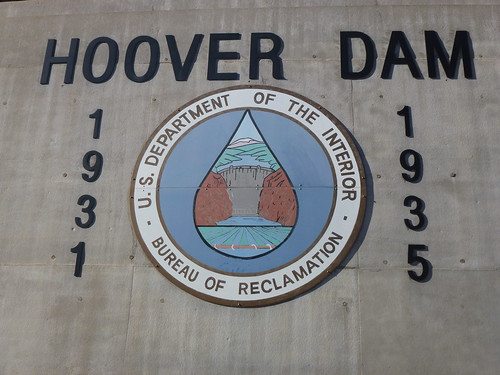 |
| Take note of the years |
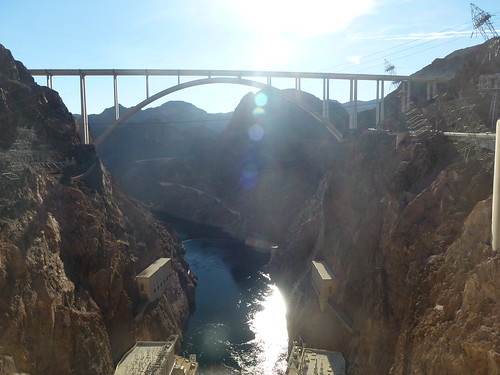 |
| The dam is 726 feet high It is 1244 feet long At the top it is 45 feet thick |
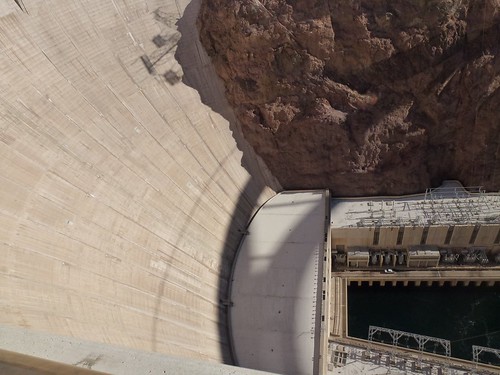 |
| Look down from the top, and you will gasp just a bit. |
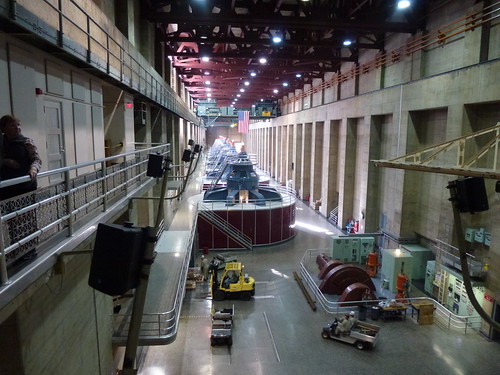 |
| Does this "room" which houses the turbines look small as you watch from above? |
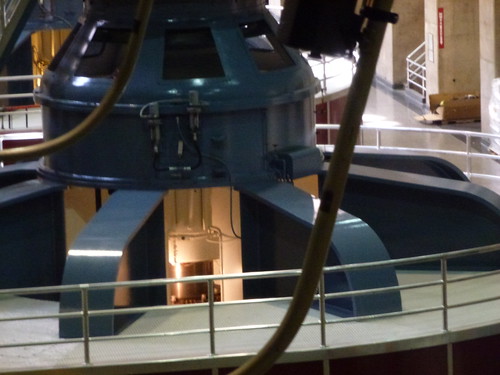 |
| Here is a little bit of a close-up. These are HUGE. |
Imagine the political upheaval. The mighty Colorado
runs through seven western states into Mexico ,
and each state has its own priorities and problems. Within each state are two factions: urban and
rural. Each faction has its own
priorities and problems. Before anything
can be done, the federal government has to improve and furnish funds. There is also the conflict between money
intended solely for the west without consideration of the eastern part of the
country. Political progress is
snail-crawling slow. It takes years before Herbert Hoover, well
before his presidency, can negotiate the Colorado River Compact to make the
dam a possibility.
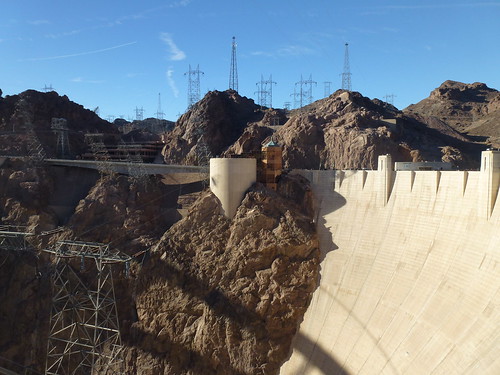 |
| Hydroelectric energy sent out to power the states. |
More than 200 engineers helped design the dam that was first
proposed in 1922 and approved through the Boulder Canyon Project Act in 1928. By that time it was Herbert Hoover,
president, who signed the Act into law.
Imagine the workforce problems. The site, Black
Canyon Arizona ,
Nevada border, is in the middle
of a desert. Yet men and their families,
ailing from the early part of the depression, heard about the job possibilities
and ventured lock, stock, and barrel out to the blistering desert where there
was no housing or facilities ready for them, only the hope that there was a
job. Many lived in tents. Some did not
have even that. Work did not begin until
a year after word of the project went out, but the men wanted to work, and they
camped out and suffered until construction commenced in 1930. Sometimes the temperatures rose to a
blistering 130°.
Over 21,000 men worked on the dam, about 5,000 at any given
time, in three shifts a day round the clock.
Men worked seven days a week, fired if they refused. Two days off a year, Christmas and July 4th,
optional and without pay. It is
estimated that 107 men lost their lives on the project which was miraculously
finished in record time. There were
work-related issues, a strike, oftentimes a carelessness toward worker safety
and health, but most issues were cast aside to complete the project.
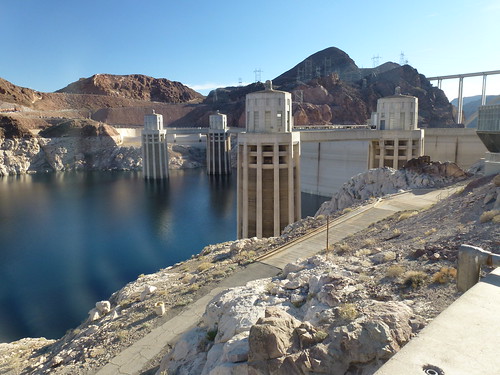 |
| After serving its purpose, the water is released on the other side of the dam. |
Imagine this miracle: the Colorado River
was diverted on Nov. 14, 1932
and the last concrete was poured on May
29, 1935 . President Franklin
D. Roosevelt dedicated it (then known as the Boulder Dam) on Sept. 30, 1935 . The time span is a miracle! Just think of public works’ progress in your
area today!
And public works the Hoover Dam was. This was man’s attempt to harness a wild,
untamed river, the Grand Canyon carver—the mighty Colorado
River . Harness its power
and floods plaguing one section might be stopped and allow agriculture to
flourish. Harness its power and the
desert could be watered into cooperation with agriculture and human life.
Had the dam been built by pouring concrete the conventional
way, the concrete would have taken 125 years to cure. New techniques had to be developed.
There are a host of engineering and architectural developments as
by-products of the dam’s construction.
When the gracefully arched dam was finished and the water
poured in to the area beyond, Lake Mead was formed—115
miles long and 500 feet deep. This is in
the middle of the desert!
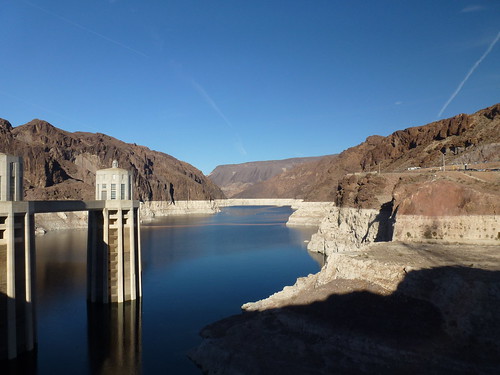 |
| Notice the white "border." Only once in its history were the spillways opened. That was in 1980. The water level was so high that it left its watermark as it receded. I think it adds even more beauty to the scene. Don't you agree? |
The Hoover Dam is also beautiful. Its design is futuristic in an art deco
style. In the engine room where 17
turbines generate two billion watts of electricity, the floors are terrazzo
marble in designs reminiscent of Native American patterns. The dam is
magnificent, inside and out. There is even a celestial map marking the exact
position of the stars on the day President Roosevelt dedicated the dam.
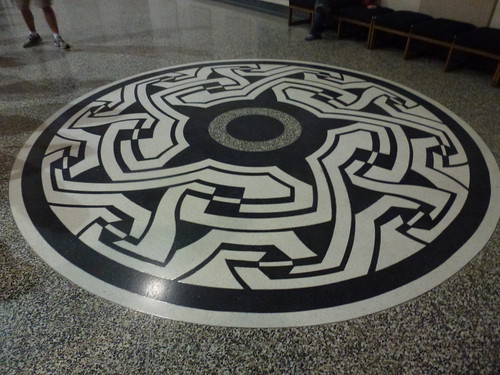 |
| Priceless by today's standards. Impossible to use terrazzo marble today. |
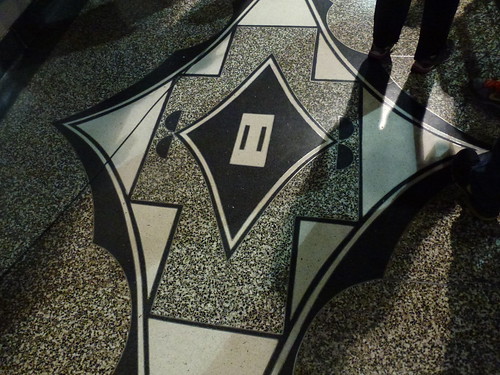 |
| You can also see how huge these designs are. Quite magnificent. |
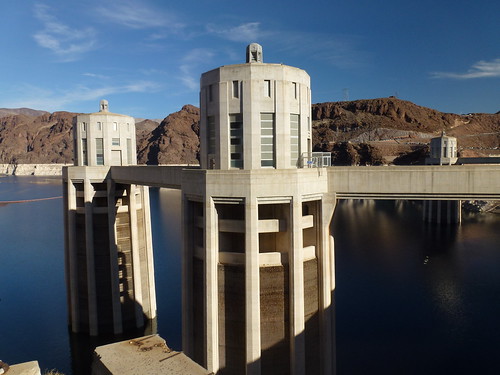 |
| Beautiful |
Friday, May 02, 2014
BLUEBIRD, BLUEBIRD THROUGH MY WINDOW....
 |
| The bluebird is New York State's official bird. Its population dwindled as attacks by English house sparrows chased them from their nesting sites. Over the last years, New Yorks busily installed bluebird houses on their properties. The result of the concerted effort, according to an article in our local paper, The Times Herald Record, touts the bluebird's resurgence thanks to houses like this--one of several in our back yard. Nice to read. Wonderful to see. A sight to enjoy. (Are you old enough to remember the elementary school song that is the title of this post?) |
Subscribe to:
Posts (Atom)